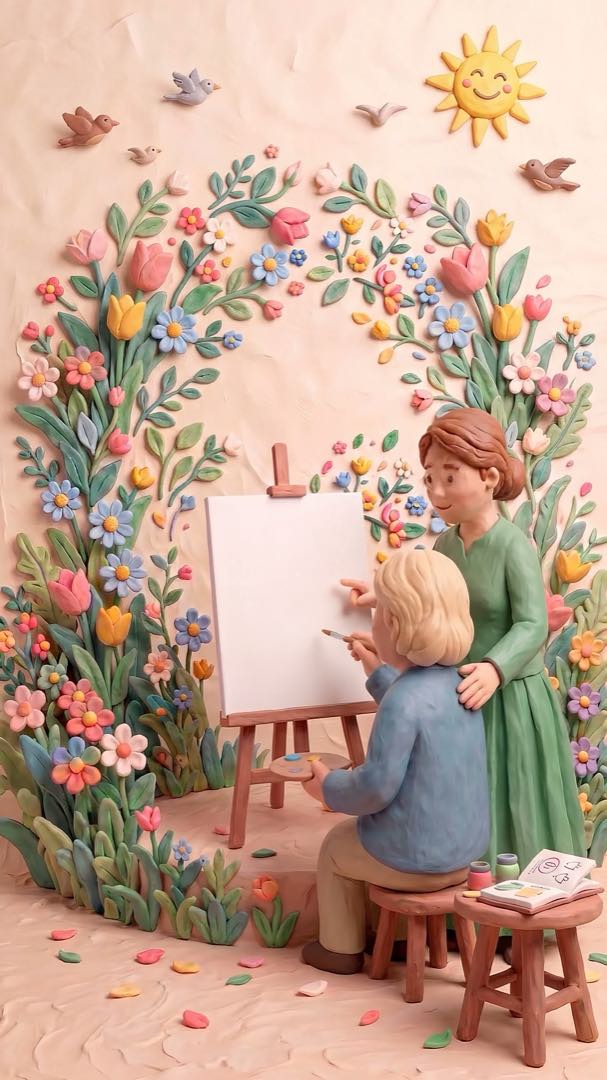
What do you remember?
“Art is a powerful tool of communication. Its therapeutic benefits for emotional well-being have been reported across diverse populations — and it meets Holocaust survivors where words, at the edge of trauma, cannot go.”
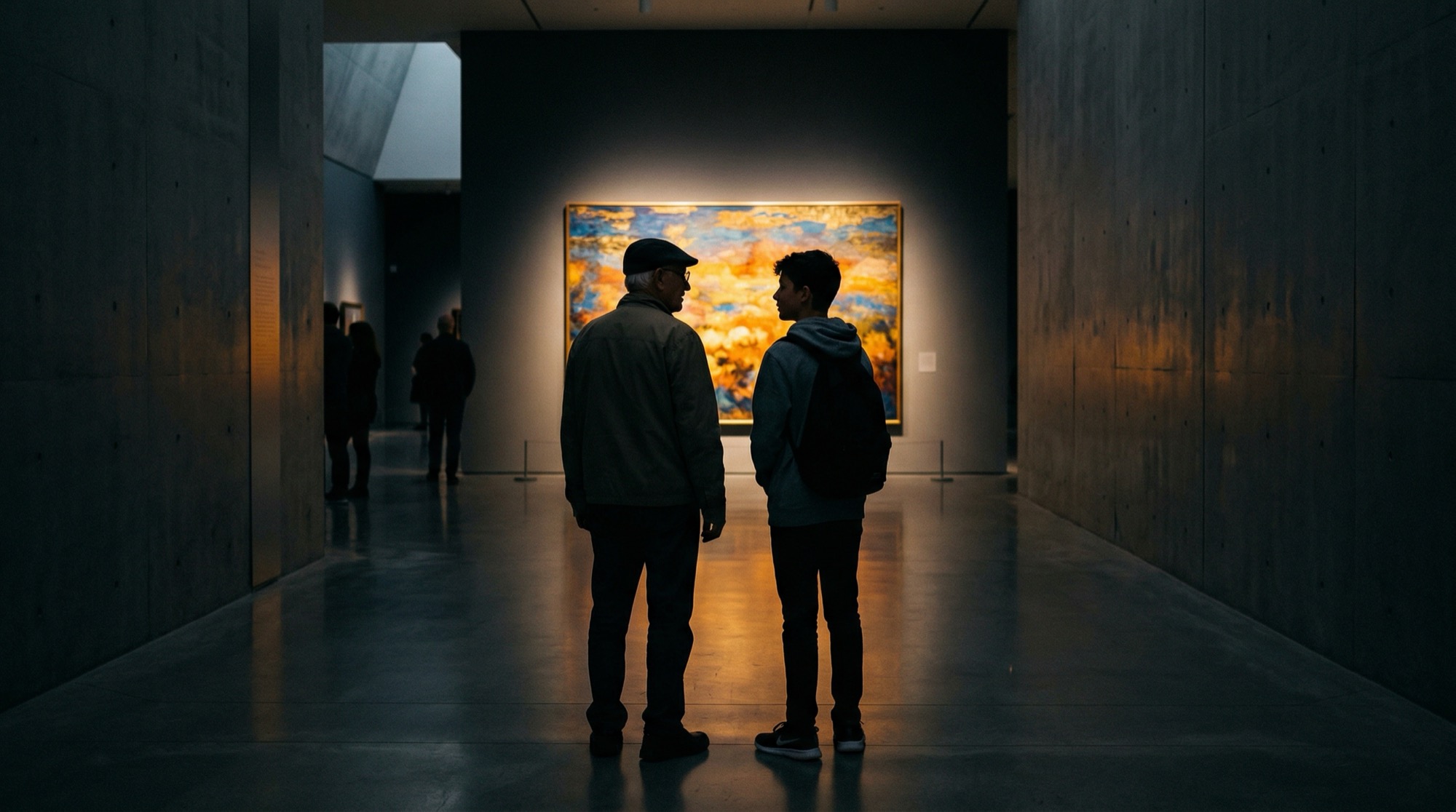
Their memories cannot be inherited — only witnessed. Every year the door closes a little further, and with it, the chance for a young person to stand in a room with someone who was there.
Holocaust Remembrance Day, Raoul Wallenberg Square, Stockholm 2013 · Photo by Frankie Fouganthin, CC BY-SA 3.0
Each year, the number of survivors able to spend a morning with a class falls. The program works with survivors through a Licensed Creative Arts Therapist at community partner sites — on their terms, at their pace, through paint rather than performance.
Remember & Rebuild keeps that window open — before it fully closes.
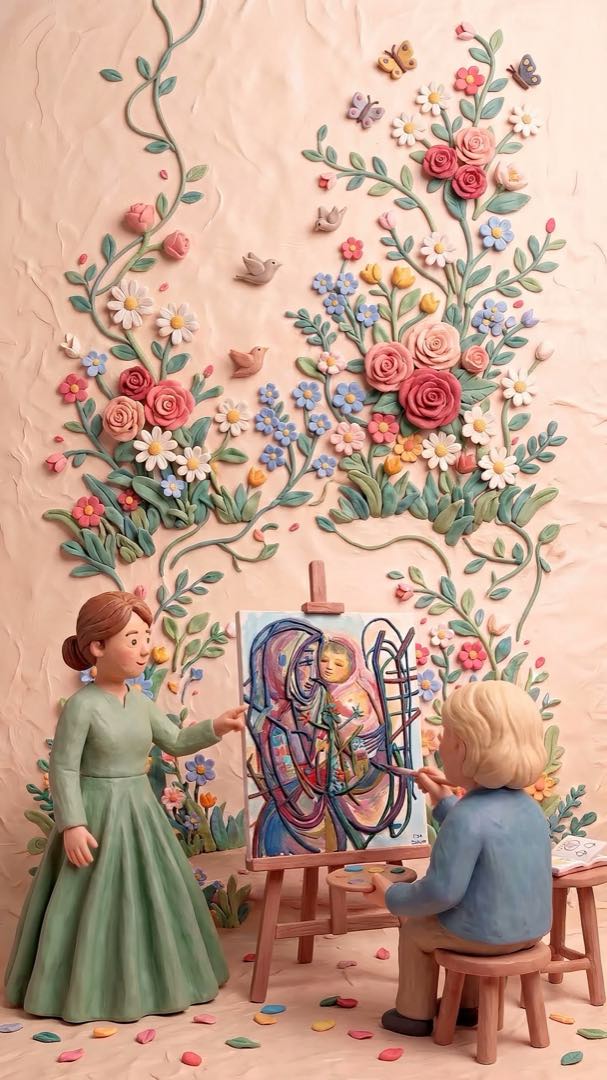
The program is an exercise, not a lecture. Over two 90-minute sessions, a survivor creates two paired artworks with a Licensed Creative Arts Therapist beside her. One looks back. One looks forward. What you’re about to watch is the arc of a single canvas turning into both.
“Art is a powerful tool of communication. Its therapeutic benefits for emotional well-being have been reported across diverse populations — and it meets Holocaust survivors where words, at the edge of trauma, cannot go.”
She doesn’t begin by speaking. She begins by loading a brush. During trauma recall, the region of the cortex responsible for speech — Broca’s area — demonstrably goes quiet. The hand remembers before the mouth does: a color, a texture, the exact charcoal of a night that still waits behind the eyes.
The first canvas asks one question. Only one. Not tell us what happened — but: what do you remember?
“I couldn’t write it. I couldn’t tell my children. But through the paint, the memories emerge not as rigid facts — as vibrant visual expressions.”
Art-making bypasses the prefrontal cortex to reach the amygdala and hippocampus directly, allowing dissociated imprints to be externalized and reorganized into coherent autobiographical memory.
— The Silent Bridge: A Primer on Art, the Brain, and Healing from Trauma, Project Witness Clinical Framework
She sets the brush down.
She picks it up again.
“My art makes me laugh. I feel like a little girl — but a happy girl.”
Rebuild is not forgetting. It is the second canvas — the one she paints only because she painted the first. A village with a sun in it. A path with flowers. Or the face of a grandchild who never met the people whose names are in her coat.
Post-program evaluation reports the same finding each time: Session 1 alone increases historical knowledge but can leave students distressed. Session 2 alone lacks grounding. Together, they transform.
“My grandfather never told us. He left a box of photographs and a silence I grew up inside. I couldn’t ask him what I wanted to ask. So I painted what he left me instead.”
The program doesn’t end when a survivor puts down her brush. It ends when someone else picks one up — in her name, in her language, with her work still in the room.
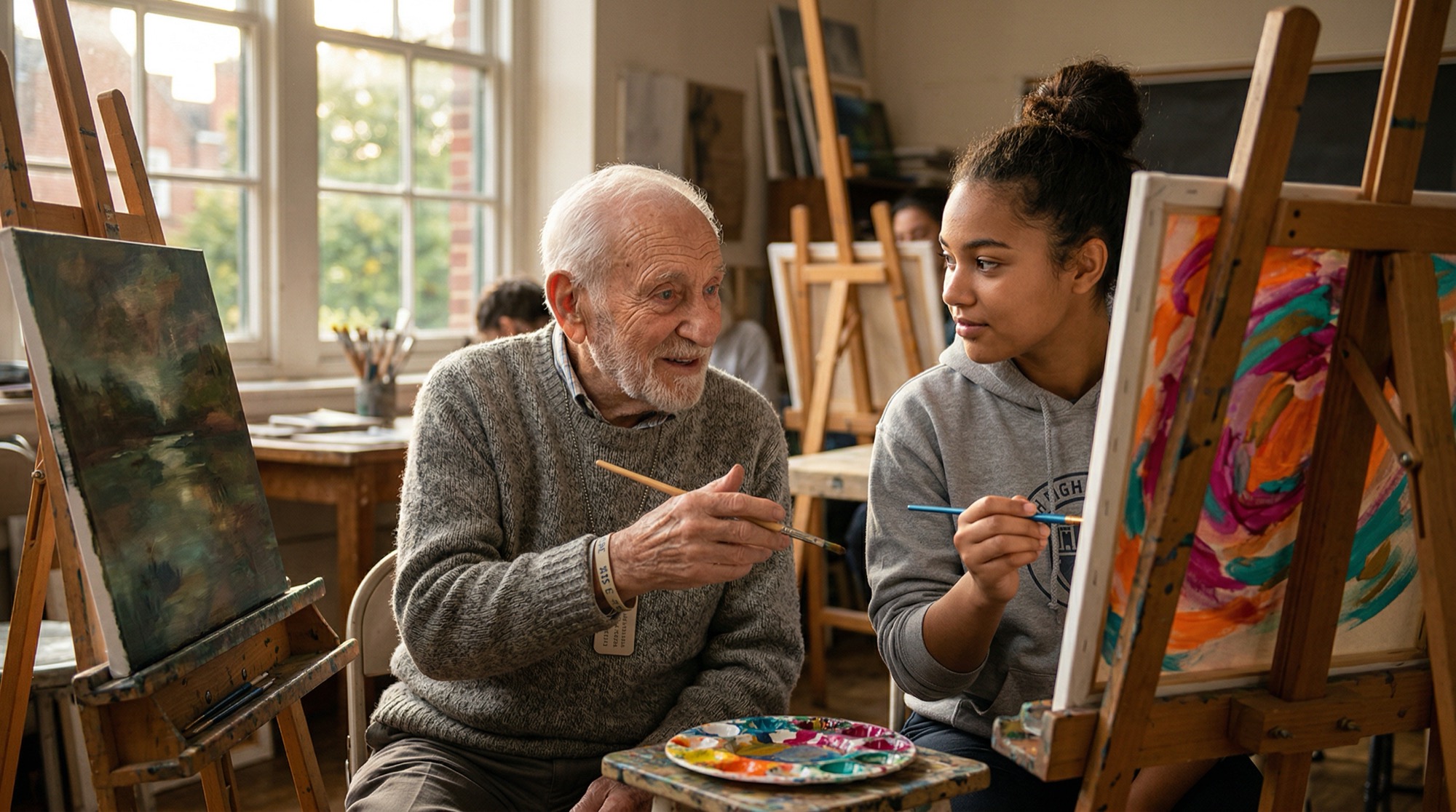
A Licensed Creative Arts Therapist works with a small group of survivors over two 90-minute sessions to create their paired Remember and Rebuild artworks. Those paintings then travel — into grade 8 to 12 classrooms where a teaching artist guides students through their own two-canvas response. Some survivors come with their work. All of it does. One morning of survivor art-making reaches up to eight classrooms.
This is not a memorial gesture. It is a clinically-indicated intervention grounded in two decades of neuroimaging and case research on art therapy with aging trauma survivors. Read the synthesis we prepared for educators, administrators, funders, and clinicians.
“Art therapy uses integrative techniques to captivate the soul, body and mind in ways that verbal expression alone doesn’t appear to… The scope of kinaesthetic, sensory, perceptual, and symbolic communication motivates the uncommon receptive and expressive communication modes that can function beyond language’s limitations.”
“Holocaust survivors who engaged in art reported higher resilience than all other three groups… Although showing higher resilience, this group also presented vulnerability — their level of PTSD was higher than that of comparisons. This presents a complex picture of growth alongside persistent vulnerability.”
“The painting session became a safe space, which was under her control… She was free in analyzing her mood and feelings and free in expressing them in a way that was most comfortable for her… Art therapy became a true guiding light in her journey.”
Get the synthesis delivered to your inbox and start reading immediately. We’ll use your email only to send the brief and occasional program updates — you can unsubscribe at any time.
If it doesn’t begin automatically, click here to download the brief.
Remember & Rebuild is not a visit — it is an operational system. Survivors create in one track; students respond in another. The same Remember → Rebuild arc is lived twice, in parallel, and the work meets in a year-end exhibition. Everything a partner school receives is designed around that architecture.
5–10 participants · Licensed Creative Arts Therapist · partner site
Survivors create artwork surfacing difficult memory — darkened landscapes, separated figures, abstract representations of loss. The therapist holds the space; materials are clinician-selected to titrate safety.
Outcome: the Remember piece, created once, travels to schools.
Same group, one to two weeks later. Survivors create paired artwork expressing continuity and hope — blooming gardens, reunited families, symbols of faith restored.
Outcome: the Rebuild piece. The two pieces travel together, always.
15–20 students · grades 8–12 · teaching artist + therapist coverage
Students view the survivor’s Remember artwork and hear her testimony. They then create their own Remember piece in response — a chapter they carry, a challenge they don’t talk about.
Outcome: student Remember pieces, held for Session 2.
Same class, the same pairing. Students view the Rebuild artwork and create their own — their future, what they are becoming, what comes next. The two student pieces are shown together alongside the survivor’s.
Outcome: four canvases, two questions, one answered conversation.
One morning of survivor art-making travels into up to eight classrooms.
A Licensed Creative Arts Therapist works with 5–10 survivors over two 90-minute sessions to create paired Remember and Rebuild artworks. That work then becomes the central object of 16+ classroom sessions across a program year. This is what allows us to reach 60–80 classrooms by Year Three while protecting the survivor population we serve.
At the end of each program year, survivor and student paintings hang side by side. Same two questions. Different hands. Visitors read the four canvases as one conversation — memory answered by hope, loss held up by what comes next.
An in-person survivor visit where we have partners on the ground — the NYC metro, South Florida, California, Chicago, Cleveland, and Baltimore — and we’re open to requests from anywhere a survivor can reasonably reach. A complete digital program everywhere else. Same two-session arc, same paired artwork exercise, same clinical grounding — adapted to where you are.
A survivor’s paired artworks arrive at your school accompanied by a teaching artist and Licensed Creative Arts Therapist. When the survivor is able, she comes with her work. Two 90-minute classroom sessions. If you’re outside our core regions, ask — we’ll try to make it work whenever a survivor can reasonably reach you.
Everything a teacher needs to run the full two-session program. Survivor testimonies on video, high-resolution artwork, the complete facilitator guide, and all nine deliverables.
“Project Witness has significantly enriched our curriculum — helping students understand resilience, responsibility, and the weight of what they inherit.”
Logistics, clinical coverage, and what to expect for educators, survivors, partner organizations, and funders.
No. The program supports in-person survivor-accompanied visits in our core regions — the NYC metro, South Florida, California, Chicago, Cleveland, and Baltimore, with requests welcome from anywhere a survivor can reasonably reach — a traveling-artwork model where the survivor’s paintings come to your school with a teaching artist, and a fully digital program for schools anywhere in the country.
The core educational programming is designed for grades 8–12. Therapeutic painting sessions for survivors are designed around Licensed Creative Arts Therapist coverage at community partner sites.
Every survivor session is led by a Licensed Creative Arts Therapist with trauma-informed and geriatric training. The therapist is in-room, not on-call. This is non-negotiable in the program’s design. Classroom sessions include therapist coverage as well.
No — and this is the heart of the program’s design. A single pair of survivor artworks, created in a dedicated art-therapy session, can travel to up to eight schools over a program year. Survivors accompany their work when they are able. The work carries testimony either way.
From $2,100 per school for Title I schools up to $2,500 for single-school bookings. District packages of 3+ schools are $2,250 per school. This includes licensed therapist coverage, all materials, the survivor’s artwork, and the full 9-deliverable pack.
We have an explicit ethical succession plan. Year 1 is survivor-led with full recording for preservation; Years 2–3 transition to co-delivery with trained descendants; Year 4 and beyond operate as an archive-anchored program using the work and recordings accumulated in Years 1–3.
Bring Remember & Rebuild to your classroom.
Every step is voluntary, guided, and on your terms.